What Threatens Africa’s Rangelands?
The Kaza Example: Bush encroachment reduces grazing capacity and diminishes biodiversity.
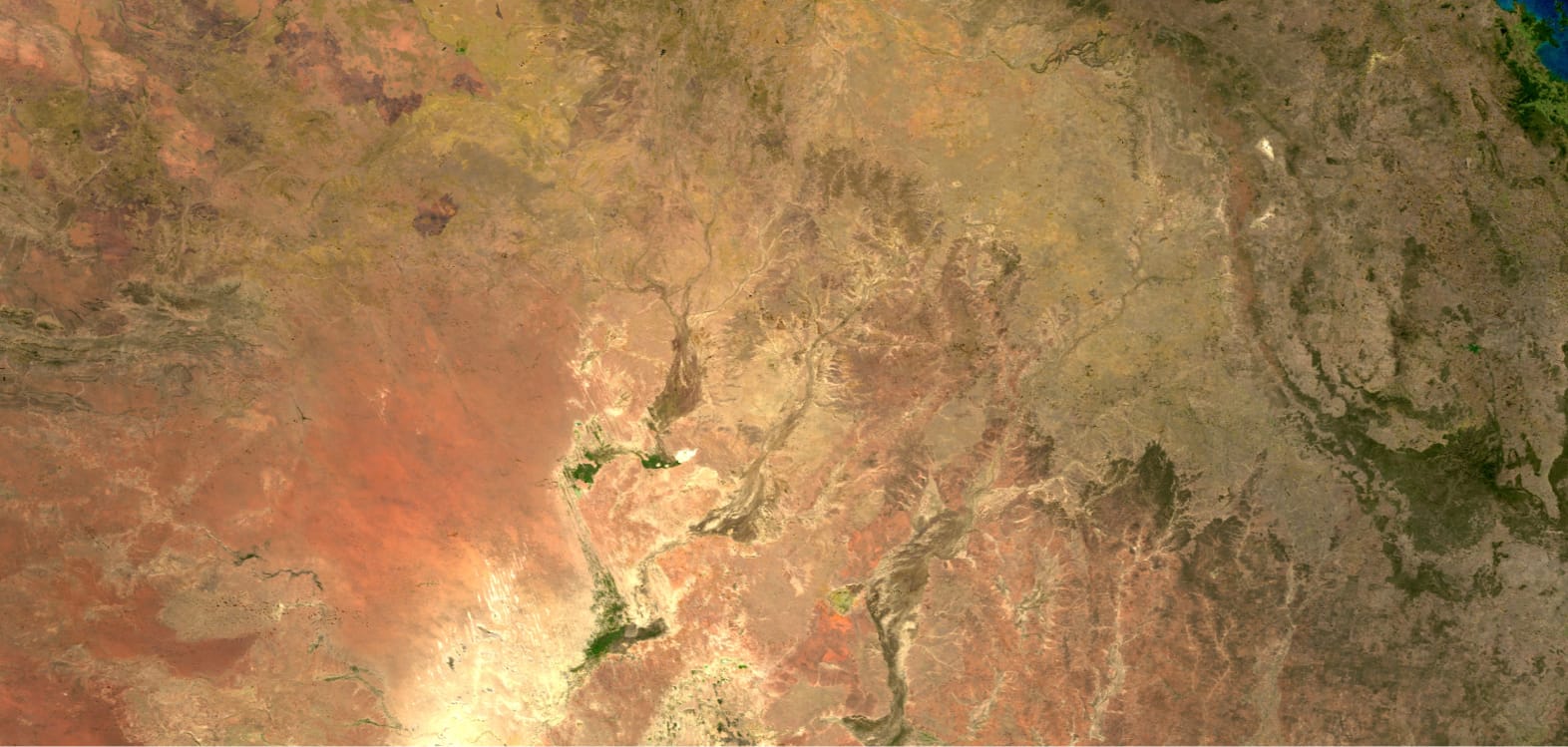
Rewild Capital. in partnership with REHerd Africa produced a rangeland condition assessment for the KAZA region. We conducted a spatial and temporal assessment of vegetation fractional cover (% cover per 90m grid cell) across eligible grazing area within the 516,000 km2 KAZA landscape). We found that median woody cover has increased from 30% to 52% between 2013 and 2023 – a phenomenon known as “bush encroachment.” This occurrence has been documented as one of the most ubiquitous rangeland degradation issues across Africa (Venter et al. 2018). Bush encroachment is caused, largely, through three mutually reinforcing factors:
Overgrazing –reducing the grassy layer’s ability to suppress woody seedlings
Fire suppression – Regular fires — especially planned, controlled burns — keep grass and woody plants in dynamic balance. When burning stops, shrubs and trees take hold; and once bush encroachment passes a threshold, the landscape becomes too dense for natural fires to occur, which further prevents fires and lets woody vegetation spread.
Higher CO2 levels – Rising atmospheric CO₂ acts like a fertilizer for shrubs and trees—tilting the competitive balance away from grasses. The irony is stark: the same emissions driving climate change are also fueling the spread of woody plants that degrade rangeland productivity—making climate change both a cause and consequence we now must manage.
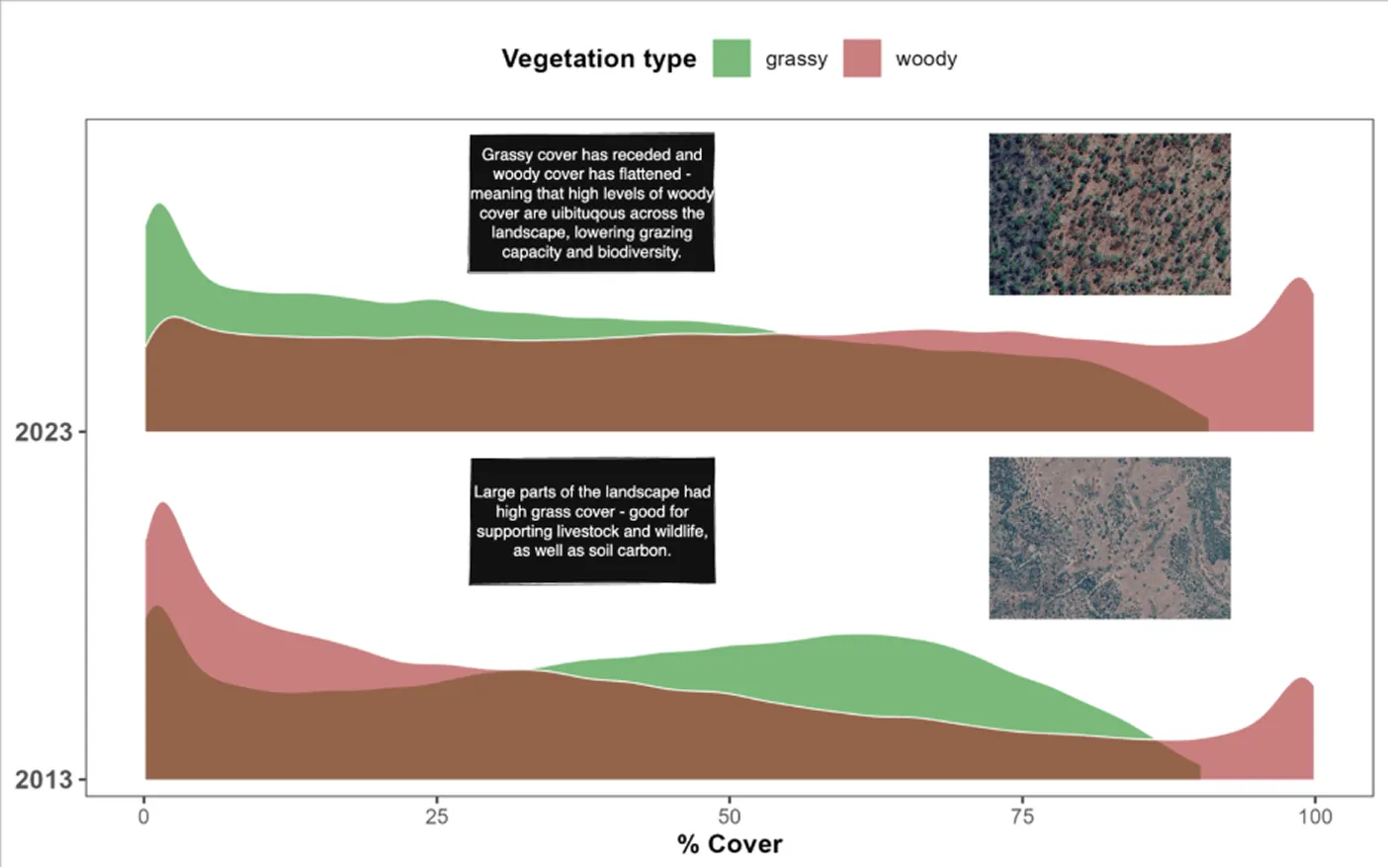
The problem with bush encroachment is that while it maintains a facsimile of ‘naturalness’, it reduces both the grazing capacity of the land through reduced forage production and diminishes biodiversity through the homogenisation of landscape structure (White et al. 2024). Crucially, grassland ecosystem services in African savannas begin to decline at around 40% woody cover.
Across the KAZA region, close to a million people rely on the ecosystem services provided by grasslands and grassy savannas. Our analysis shows that the median grassy cover in KAZA has declined from 44% to 33%. This will have enormous impacts on livelihoods in the region. As grazing intensifies on the remaining grasslands, it accelerates overgrazing as forage dwindles, thus reinforcing a poverty trap in communities that rely on grassland ecosystem services (White et al. 2022).
This is a big problem, but also a big opportunity.
Bush-thinning can be financed by converting encroaching woody vegetation into biochar, and restored grasslands can be sustained through adaptive grazing and fire management. Doing so enhances grazing capacity, biodiversity and resilient livelihoods and mitigates climate change through soil carbon sequestration.